

 Drainage Projects
South Venice Home Flooding: A 4-Pump Drainage System Built for Extreme Water
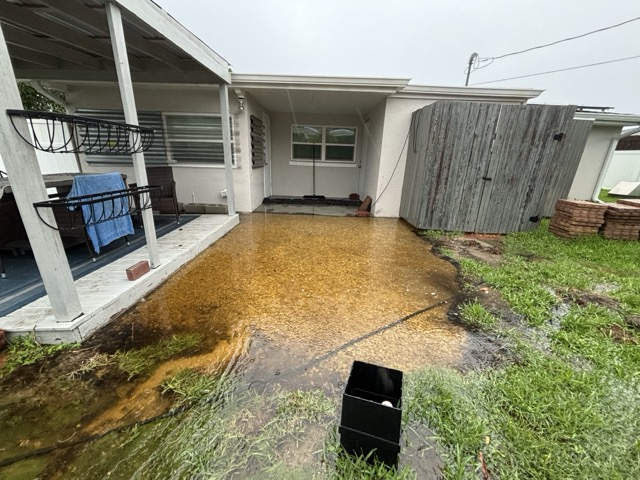
When the new owners of this South Venice home contacted us, they weren’t dealing with a normal wet-yard problem. During heavy Florida rainfall, water was accumulating across the backyard and side yard and had begun getting into the house.
They had recently purchased the property and quickly discovered that the drainage problem was much more severe than they had anticipated.
Water wasn’t coming from one obvious source. It was arriving from virtually every direction.

South Venice Drainage Project at a Glance
This Wasn’t Just Standing Water — Water Was Getting Into the House
Standing water in a lawn is frustrating. Once that water begins reaching doorways and entering a home, the objective changes significantly.
Protecting the structure became the priority.

The homeowners asked us to do anything and everything reasonably possible to improve the situation.
Before selecting a drainage system, however, we needed to understand why so much water was accumulating on this particular property.
The Property Was Receiving Water From Almost Everywhere
Our drainage assessment identified multiple contributing conditions rather than one isolated source.
- Neighboring properties on multiple sides were higher.
- Stormwater runoff was entering from surrounding properties.
- Roof and downspout runoff added additional water.
- Ground conditions became saturated during major rainfall.
- The property’s grading directed water toward the home.
- Existing drainage installed previously was inadequate.
This combination created an unusually difficult drainage environment.

The challenge wasn’t simply collecting water from one low spot. The property was functioning as a low area surrounded by higher ground, with large volumes of water arriving from multiple directions.
Laser Elevations Revealed Another Major Problem: Reverse Grade
As with our other drainage projects, we shot property elevations with a laser rather than assuming where water could be moved.
The measurements confirmed a significant design challenge: the property had reverse grade.
This meant we couldn’t simply install an underground pipe and expect gravity to carry all of the backyard water toward the street.
In fact, the grading conditions could allow water from the front portion of the property to contribute to the problem rather than naturally draining the backyard toward the road.
Why Gravity Alone Wasn’t Enough
Gravity drainage depends on having a lower discharge elevation available. On this property, the elevations did not provide the continuous natural fall needed to rely exclusively on gravity.
That meant the primary drainage strategy needed mechanical assistance: collect the water and pump it toward an appropriate discharge point.
Previous Drainage Attempts Weren’t Solving the Property
There had already been attempts to manage drainage around the home, but the existing components weren’t designed around the total amount of water entering the property or the reverse-grade condition.

This is an important distinction with drainage work: having drains on a property doesn’t necessarily mean the property has an effective drainage system.
Collection, capacity, elevation and discharge all have to work together.
The Solution: A Multi-Pump Expulsion Drainage System
Because gravity alone could not reliably evacuate the water, this property required an extensive landscape sump pump system.
The completed system incorporated:
- 3 sump pump basins
- 4 sump pumps total
- One high-demand basin containing 2 pumps
- Approximately 150 feet of 2-inch solid PVC discharge pipe
- 2 gravity drains as additional drainage paths
- Downspout connections
- Channel/deco drainage
- Battery backup protection on 2 pumps
- Discharge toward the roadside ditch
How the System Works
The two gravity drains provided additional drainage capability where elevations allowed, but mechanical pumping became the primary method of moving the largest volumes of water away from the home.
The Most Important Part of This Project Happened During a Storm
This project also demonstrates something important about difficult drainage work: sometimes the actual property conditions during a major rain event provide information that simply cannot be replicated on a dry day.
We initially installed one pump as part of the drainage solution.
Then we returned to the property during a storm to observe what was actually happening.
What we saw changed the scope of the system.
The sheer amount of water arriving from surrounding properties and multiple directions was far greater than an ordinary residential drainage problem. The system needed substantially more pumping capacity.
Instead of assuming the initial installation was sufficient, we adapted the design around what the property was showing us during the storm.
The system was ultimately expanded to four pumps across three basins, with one of the highest-demand basins containing two pumps.
Designed for an Extraordinary Amount of Incoming Water
At full combined rated capacity, the installed pumps provide approximately 26,000 gallons per hour of pumping capacity.
That number helps illustrate how unusual this property is.
Even with substantial mechanical drainage capacity, major storms can deliver an enormous amount of water to a low property when surrounding lots are higher and runoff converges from multiple directions.
The objective is therefore not to promise that a Florida property will never contain water during an extreme weather event. The objective is to provide the incoming water with enough collection and evacuation capacity to substantially reduce accumulation and, most importantly in this case, help keep it from entering the home.
Why Battery Backup Mattered
A mechanically pumped drainage system depends on electrical power. Unfortunately, some of the weather events most likely to create severe flooding are also capable of causing power interruptions.
For additional protection, two pumps were equipped with battery backup.
Battery backup does not eliminate every risk during an extreme storm, but it adds another layer of resilience to a system where continued water evacuation can be critical.
Installing the South Venice Drainage System
The project required a combination of machine excavation and substantial hand digging because of access limitations and the amount of drainage infrastructure being installed around an existing home.
1. Assess Water Sources
We evaluated runoff from surrounding properties, roof water, groundwater, grading and the existing drainage attempts.
2. Shoot Elevations
Laser measurements confirmed the reverse-grade condition and showed why gravity alone could not be relied upon.
3. Establish Collection Areas
Collection points were positioned around the areas receiving and holding the greatest amount of stormwater.
4. Install the Pump Basins
Three sump basins were incorporated into the system. One basin ultimately received two pumps because of the amount of water reaching that collection area.
5. Install the Discharge Network
Approximately 150 feet of 2-inch solid PVC was installed to transport pumped water toward the roadside ditch.
6. Integrate Additional Drainage
Downspouts, channel drainage and two gravity drains were incorporated to manage additional sources and provide multiple drainage paths.
7. Test the System
Forced water testing was used to verify operation and discharge.
8. Observe It During Real Rain
Returning during a storm revealed the extraordinary volume of incoming water and led us to substantially increase the pumping system.
The primary installation work took approximately three days, with the system subsequently adapted as actual storm conditions revealed the full extent of the property’s drainage demand.
The Result: Substantially Less Flooding and a Better-Protected Home
The property has experienced significant rainfall since the drainage work was completed, giving us opportunities to observe the system under real conditions.
The difference is substantial.
The property can still receive extraordinary amounts of stormwater during major Florida rain events—the drainage system cannot prevent rain or stop neighboring runoff from reaching the lot.
What it can do is collect and actively evacuate that water before it accumulates to the extent it did previously.
Most importantly, the system has helped keep the incoming stormwater from entering the home.
For the homeowners, who only live at the property part of the year, having a drainage system actively moving water away from the house provided significant relief.
What This Project Taught Us About Extreme Florida Flooding
This was not an ordinary residential drainage project.
It remains one of the most extensive and demanding drainage problems we’ve encountered at a single home.
A contractor could have installed a French drain, a single pump or another standard drainage solution and technically said that drainage had been installed.
It would not have addressed the actual problem.
Never Underestimate the Water
Florida rainfall can expose drainage conditions that aren’t obvious on a dry day. When a low property receives runoff from multiple higher properties, roof areas and saturated ground at the same time, the amount of incoming water can be extraordinary.
The drainage system has to be designed around what the water is actually doing—not simply around the name of a drainage product.
This project also reinforced why we approach difficult properties with a diagnostic framework:
On some properties, those answers lead us to a simple gravity drainage system.
On this property, the reverse grade and extraordinary volume of incoming water led us to an extensive mechanical expulsion system with multiple pumps, multiple collection areas, backup drainage paths and battery protection.
The property determines the system—not the other way around.
South Venice Flooding & Drainage FAQs
Why wouldn’t a French drain have solved this flooding problem?
The primary issue was not simply subsurface water that needed to be intercepted along a gravel trench. Large volumes of stormwater were entering a low, reverse-graded property from multiple directions. The water needed to be collected and mechanically moved toward a viable discharge location.
Why did this property need four sump pumps?
The amount of incoming stormwater during significant rainfall was unusually high. After observing the property during an actual storm, the system was expanded to four pumps across three basins, including two pumps in one high-demand basin.
How much pumping capacity was installed?
The four pumps provide approximately 26,000 gallons per hour of combined rated pumping capacity. Actual system performance can vary with operating conditions, discharge configuration and other site-specific factors.
Where does the pumped water go?
The system uses approximately 150 feet of solid PVC discharge piping to move collected stormwater toward the roadside ditch.
Why were gravity drains included if the property needed pumps?
Gravity was available in limited areas but could not serve as the primary solution because of the property’s reverse grade. The gravity drains provide additional drainage paths where the elevations allow them to function.
Why add battery backup to a landscape sump pump?
Severe storms can create both flooding and power interruptions. Battery backup on two pumps provides an additional layer of protection if normal electrical power is interrupted.
How do you know whether a yard needs gravity drainage or sump pumps?
The decision depends heavily on property elevations and available discharge locations. Venice Drainage uses elevation measurements and an on-site assessment to determine whether water can move naturally or requires mechanical assistance.
Can you evaluate severe residential flooding in South Venice?
Yes. Our drainage assessment looks at where water originates, where it collects, property elevations, required capacity and where the water can appropriately be discharged before a system is recommended.
Is Water Threatening Your Home?
If your South Venice property experiences severe standing water, runoff from neighboring properties or flooding that approaches the house, the solution may require more than simply installing a drain in the lowest part of the yard.
You don’t need to know whether you need a French drain, gravity system or sump pump. We’ll start by evaluating where the water comes from, where it collects, what the elevations allow and where the water can appropriately be moved.
