


 Drainage
How Much Does a French Drain Cost in Florida? [2026 Pricing Guide]
If you have standing water, a soggy side yard, or water collecting near your home after a Florida rainstorm, a French drain may be one of the best ways to move that water somewhere safer. But before installing one, most homeowners have the same question: How much does a French drain cost in Florida?
For many residential projects, a professionally installed French drain in Florida can cost approximately $25 to $50+ per linear foot. Smaller, straightforward projects may cost a few thousand dollars, while larger or more complicated drainage systems can cost $5,000 to $10,000 or more.
The actual price depends on much more than the length of the drain. Depth, accessibility, excavation, soil conditions, discharge location, existing landscaping, catch basins, downspouts, and whether a sump pump is needed can all affect the final cost.

Average French Drain Cost in Florida
There is no universal price for a French drain because every property drains differently. However, the following ranges can help Florida homeowners establish a realistic starting budget.
| French Drain Project | Typical Planning Range |
|---|---|
| Small drainage project | $1,500–$3,000+ |
| Average residential French drain | $2,500–$5,000+ |
| Large yard drainage system | $5,000–$10,000+ |
| Complex drainage system with pumps or multiple drains | $7,500–$15,000+ |
These are general planning ranges rather than quotes. Your property’s layout, drainage problem, materials, access, and required system design determine the actual installation price.
How Much Does a French Drain Cost Per Foot in Florida?
A useful starting point for professionally installed residential French drains is approximately $25 to $50+ per linear foot.
However, pricing a drainage project strictly by linear footage can be misleading. Installing 50 feet of drain in an open lawn is very different from installing 50 feet between two homes where equipment access is limited, utilities must be avoided, landscaping needs to be removed, and the drain has to travel significantly deeper to reach an appropriate discharge point.
That is why a professional drainage estimate should evaluate the entire water-management problem rather than simply multiplying the number of feet by a fixed price.
What Affects the Cost of a French Drain?
Several factors can substantially change the price of French drain installation in Florida.
1. Length of the Drain
Longer French drains require more excavation, drainage pipe, gravel, filter fabric, labor, and restoration. Length is one of the largest components of the overall price, but it is not the only one.
2. Depth of the Trench
A shallow drainage system is generally easier to install than a deep one. The required depth depends on where water is collecting, surrounding elevations, and where the collected water needs to go.
3. Access to the Yard
Equipment access can make a major difference. A wide-open backyard provides much easier working conditions than a narrow Florida side yard between the house, air-conditioning equipment, landscaping, fencing, and a neighboring property.
4. Excavation Conditions
Roots, irrigation lines, utilities, existing drainage, landscape beds, concrete, pavers, and other obstacles can increase the amount of labor required.
5. Gravel and Drainage Materials
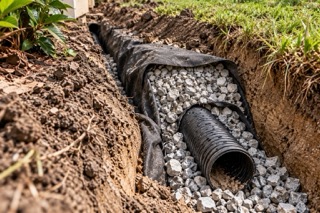
A properly constructed French drain typically involves more than simply burying a pipe. Drainage stone, perforated pipe, fittings, quality filter fabric, connections, and appropriate outlets all contribute to material costs.
6. Where the Water Will Go
This is one of the most important parts of designing a drainage system.
Collecting water is only half the job. The system also needs an appropriate way to move or discharge that water without simply creating another wet area somewhere else on the property.
Depending on the property, the solution may involve a gravity-fed outlet, another drainage system, catch basins, solid drainage pipe, or a landscape sump pump.
7. Catch Basins and Additional Drainage
A French drain is excellent for collecting subsurface water, but some properties also experience large amounts of surface water.
In those situations, strategically located catch basins or surface drains may be incorporated into the overall system.
8. Sump Pumps
Florida’s relatively flat terrain can create properties where there simply isn’t enough natural elevation change to move water where it needs to go using gravity alone.
In certain situations, a landscape sump pump may be required to actively move collected water to an appropriate discharge location. Adding a pump, basin, electrical requirements, and associated drainage infrastructure will increase the overall project cost.
Example French Drain Project Costs
Every yard is different, but looking at example projects makes French drain pricing easier to understand.
Small Side-Yard French Drain
A homeowner has a narrow area between two houses that remains wet for days after heavy rainfall. A relatively short French drain can collect the water and redirect it toward an appropriate outlet.
Potential budget: approximately $1,500–$3,000+
50–75 Foot Residential French Drain
A longer section of the backyard regularly holds water. The project requires excavation, drainage fabric, stone, perforated pipe, connections, and restoration of the disturbed area.
Potential budget: approximately $2,500–$5,000+
Large Yard Drainage System
A property experiences drainage problems in multiple areas and requires a combination of French drains, solid pipe, surface drains, and downspout connections.
Potential budget: approximately $5,000–$10,000+
Complex Drainage and Sump Pump System
A flat property has no practical gravity-fed discharge point. Water needs to be collected and mechanically pumped away from the problem area.
Potential budget: approximately $7,500–$15,000+ depending on system complexity.
Why Yard Drainage Is Different in Florida
Florida presents several drainage challenges that homeowners in other parts of the country may not encounter as frequently.
Heavy Rainfall
Florida thunderstorms can deliver a tremendous amount of water in a short period. A yard that looks perfectly dry most of the year can suddenly develop standing water during the rainy season.
Flat Properties
Much of Southwest Florida is relatively flat. Without sufficient slope, stormwater may have nowhere to naturally travel.
High Water Tables
In some areas, groundwater can remain relatively close to the surface. This can contribute to saturated soil and complicate drainage-system design.
Development and Grading
Homes, pools, patios, landscape beds, pavers, fences, additions, and neighboring construction can all change how water moves across a property.
Even relatively small elevation differences can determine whether water drains correctly or collects in a low area.

Signs You May Need a French Drain
A French drain may be worth considering if you regularly notice:
- Standing water after rainfall
- A consistently soggy lawn
- Water collecting between houses
- Mulch or landscape material washing away
- Water accumulating near the home’s foundation
- Areas where grass struggles because the soil stays saturated
- Water moving toward your home instead of away from it
- Repeated flooding in the same section of your yard
However, not every drainage problem requires a French drain. Determining why the water is collecting should come before choosing the solution.
French Drain vs. Catch Basin
French drains and catch basins solve different types of drainage problems.
A French drain is designed primarily to collect water that has saturated the soil and move it through a gravel-filled trench containing perforated pipe.
A catch basin collects surface water through an opening or grate and sends it into a drainage pipe.
For properties experiencing both saturated soil and significant surface runoff, the best drainage design may incorporate both.
French Drain vs. Channel Drain
A channel drain—sometimes called a trench or deco drain—is commonly used across hard surfaces where water needs to be intercepted.
Typical applications include:
- Driveways
- Pool decks
- Patios
- Walkways
- Garage entrances
French drains, by comparison, are generally installed underground in landscaped or lawn areas where groundwater and saturated soil are the primary concerns.
French Drain vs. Downspout Drainage
Sometimes the problem isn’t groundwater at all.
A roof can collect hundreds or even thousands of gallons of rainwater during a major storm. If downspouts release that water directly beside the home, it can overwhelm a small section of the yard.
Extending downspouts underground and directing roof runoff to an appropriate discharge location may solve the problem without requiring an extensive French drain.
In other cases, downspout drainage and a French drain can work together as part of a larger drainage system.
Can You Install a French Drain Yourself?
A basic French drain can be a DIY project, particularly when the drainage problem is small and there is an obvious gravity-fed discharge point.
However, the difficult part usually isn’t digging the trench. It is designing the system correctly.
Common French drain mistakes include:
- Installing the drain without adequate slope
- Using the wrong pipe
- Using too little drainage stone
- Skipping filter fabric
- Installing the drain too shallow
- Failing to identify the actual source of the water
- Connecting too much water to an undersized system
- Having nowhere appropriate for the water to discharge
A poorly designed drain can cost significant time and money while leaving the original flooding problem unchanged.
How Long Does a French Drain Last?
A properly designed and installed French drain can provide drainage for many years. Longevity depends on installation quality, soil conditions, materials, surrounding vegetation, sediment, and maintenance.
One of the biggest concerns is preventing soil and sediment from entering the stone and perforated pipe. Proper drainage fabric and construction practices help reduce clogging and extend the useful life of the system.
Is a French Drain Worth It in Florida?
If recurring water problems are damaging your lawn, landscaping, hardscaping, or areas around your home, fixing the underlying drainage issue can be a worthwhile investment.
The goal isn’t simply to make the yard dry faster. A properly designed system should control where water goes.
For some properties, that means a French drain. For others, a better solution may involve catch basins, downspout extensions, channel drains, grading, a landscape sump pump, or a combination of several drainage methods.
French Drain Installation in Venice, Sarasota & Southwest Florida
Venice Drainage provides residential and commercial drainage solutions throughout the Venice and Sarasota area.
We evaluate where the water is coming from, why it is collecting, and where it can safely be redirected before recommending a drainage system.
Our service area includes Venice, South Venice, Venice Island, East Venice, Nokomis, Osprey, Sarasota, Wellen Park, Englewood, North Port and surrounding Southwest Florida communities.
Depending on the property, drainage solutions may include:
- French drains
- Yard drains and catch basins
- Downspout drainage
- Landscape sump pumps
- Channel and deco drains
- Side-yard drainage
- Stormwater management
- Commercial drainage systems
Get a French Drain Estimate
If you’re dealing with standing water or a yard that stays wet after Florida rainstorms, the first step is determining exactly why the water is collecting.
Venice Drainage can evaluate your property and recommend a drainage solution based on the actual conditions of your yard rather than simply installing the same system everywhere.
Contact Venice Drainage to schedule an on-site drainage estimate in Venice, Sarasota, Englewood, Nokomis, Osprey, Wellen Park, North Port, or surrounding areas.
Frequently Asked Questions About French Drain Costs in Florida
How much does a French drain cost per foot in Florida?
A professionally installed French drain may cost approximately $25 to $50+ per linear foot as a general planning range. Difficult access, deeper excavation, additional drainage structures, pumps, restoration, and complex discharge requirements can increase the price.
What is the average cost to install a French drain?
Many residential projects may fall somewhere around $2,500 to $5,000+, although small projects can cost less and complex whole-yard drainage systems can exceed $10,000.
Do French drains work in Florida?
Yes. French drains can work very well in Florida when the system is appropriate for the property’s drainage problem and has a suitable place to discharge collected water. Florida’s flat terrain and site-specific groundwater conditions make proper design especially important.
How deep should a French drain be in Florida?
There isn’t one correct depth for every property. The drain needs to be designed around the source of the water, surrounding elevations, required slope, existing utilities, and intended discharge point.
Where does water from a French drain go?
The collected water must be directed toward an appropriate outlet or drainage system. Depending on the property, water may move by gravity or require a sump-pump system. The correct discharge method depends on site conditions and applicable local requirements.
How long does French drain installation take?
Many residential drainage projects can be completed relatively quickly, but the timeline depends on the size of the system, excavation requirements, access, weather, and restoration work.
Will a French drain fix standing water in my yard?
It can if groundwater or saturated soil is causing the problem. If the standing water is primarily caused by surface runoff, roof runoff, grading, or another issue, a catch basin, downspout system, grading correction, or combination drainage system may be more appropriate.
Should I install a French drain or regrade my yard?
That depends on why water is collecting. Regrading can help when the property’s surface elevations are directing water toward the wrong location. French drains are often better suited for collecting water within saturated soil. Some properties benefit from both approaches.
Bottom Line: How Much Should You Budget for a French Drain in Florida?
As a general starting point, homeowners should expect a professionally installed Florida French drain to cost approximately $25–$50+ per linear foot, with many residential projects landing somewhere between $2,500 and $5,000+.
But drainage isn’t a product that should be priced solely by the foot. The best system is the one that correctly identifies where the water is coming from, how to collect it, and where to send it.
If your Venice, Sarasota, or Englewood-area property has standing water, soggy grass, side-yard flooding, or drainage problems after heavy rain, a site evaluation can determine whether a French drain—or another drainage solution—is the right approach.
